AWNL 的 M系列--瑞典隕石系列,采用瑞典北部獨有的天外隕石,這種稀世之寶,很多國人還不太了解,在維基百科上扒了下來,原文和翻譯如下。配以圖片。AWNL 的M 限量系列,每年只有200條左右產(chǎn)量,買到賺到!
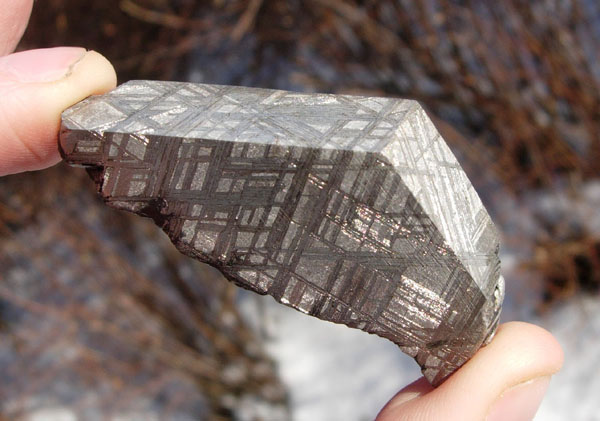
Muonionalusta 大約在公元前一百萬年落在北歐斯堪的納維亞半島,即現(xiàn)在的瑞典和芬蘭交界處以西,精八面體,IVA類隕石群組
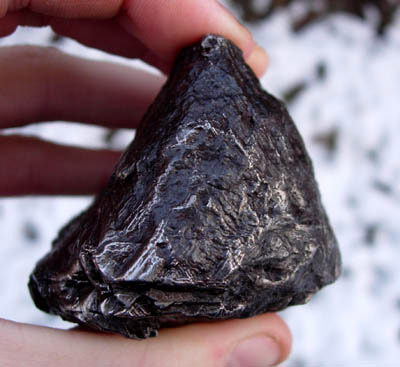
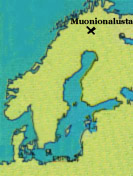
1906年,第一塊Muonionalusta隕石,在瑞典Kitkiöjärvi村附近被發(fā)現(xiàn)[1]。至今大約有四十件是已知的,有些相當大。其他碎片集中在距離北極圈以北約140公里的北博滕省Pajala區(qū)的25×15公里)的地區(qū)。很多隕石獵人常年在此尋寶。
1910年,隕石首先由A. G.Högbom教授公布于眾,他用Muonio河附近的一個地名將隕石命名為“Muonionalusta”。
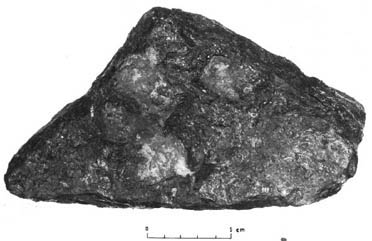
Muonionalusta這個名字對于某些人來說很難發(fā)音:Muonio河上的muoni-顯然是[mu-o-ni-o-na-lu-sta]或者/ MOO-oh-ne-oh-nah-loo-stah /意味著'食物'); - (o)n-可能是需要的連接詞;最后一個元素alusta的意思是'基地,基礎(chǔ),立場,墊子,托盤',因此可能是'穆尼奧(河流)基地'。
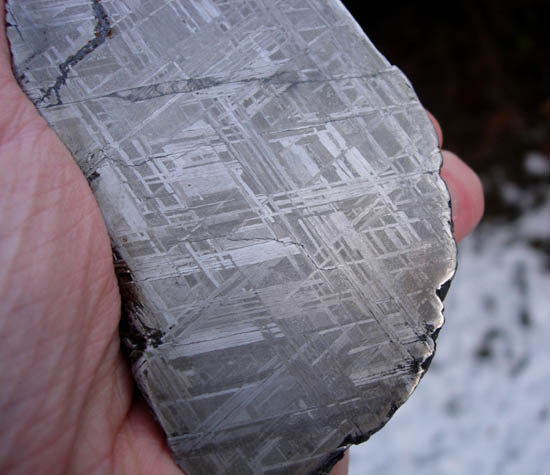
1948年NilsGöranDavid Malmqvist教授對隕石進行深入研究[2] Muonionalusta,可能是已知最古老的隕石(4.56530億年),[3]在科學(xué)上,它標志著鐵隕石中首次發(fā)現(xiàn)超石英。
研究表明它是大約一百萬年前在第四紀時期造訪地球的最古老的隕石,為一顆小行星的鐵質(zhì)內(nèi)核。當它落在我們的星球上時,它碎成了許多碎片。[4]自從降落地球以來,隕石經(jīng)歷了四個冰河時期。從北部苔原的冰川中發(fā)掘出來,有一個堅固的風化表面。
對這種應(yīng)強烈沖擊而變質(zhì)的鐵隕石的最新分析顯示,其含鎳量為8.4%,痕量稀有元素為0.33 ppm鎵,0.133 ppm鍺和1.6 ppm銥。它還含有礦物鉻鐵礦,daubréelite,schreibersite,akaganite和硫鐵礦包裹體[2],不含有放射物質(zhì),對人體無害。
這是第一次,分析證明了Stishovite超石英的存在,這種石英為極高壓力的石英石變化而成[2],可能是鱗石英后的假晶。參考文獻“在鐵隕石中首次發(fā)現(xiàn)石英石”:[1]
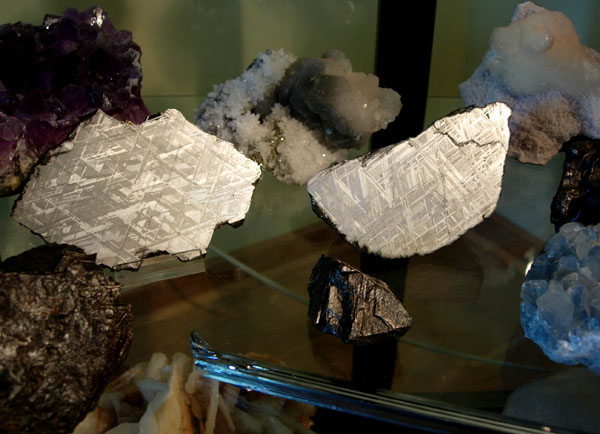
Stishovite是SiO2的一種高壓多晶型,是一種非常稀有的礦物......并且僅在與少數(shù)隕石撞擊結(jié)構(gòu)有關(guān)的情況下才發(fā)現(xiàn)......顯然,隕石石英晶體不可能來自等核壓力母體的小行星....人們可以大膽假設(shè),在Muonionalusta隕石中石筍的形成與撞擊事件有關(guān)。
2010年的一項研究報告了Muonionalusta隕石中的鉛同位素測年,并得出結(jié)論說,stishovite來自數(shù)億年前的一次撞擊事件
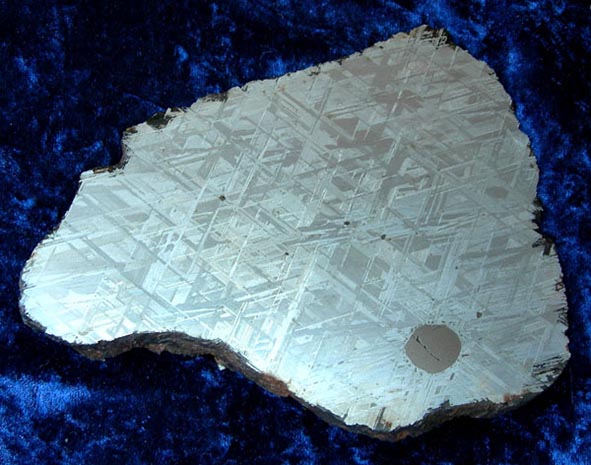
The Muonionalusta is a meteorite classified as fine octahedrite, type IVA (Of) which impacted in northern Scandinavia, west of the border between Sweden and Finland, about one million years BCE.
The first fragment of the Muonionalusta was found in 1906 near the village of Kitkiöjärvi.[1] Around forty pieces are known today, some being quite large. Other fragments have been found in a 25-by-15-kilometre (15.5 mi × 9.3 mi) area in the Pajala district of Norrbotten County, approximately 140 kilometres (87 mi) north of the Arctic Circle.
The meteorite was first described in 1910 by Professor A. G. Högbom, who named it "Muonionalusta", after a nearby place on the Muonio River. It was studied in 1948 by Professor Nils Göran David Malmqvist.[2] The Muonionalusta, probably the oldest known meteorite (4.5653 billion years),[3] marks the first occurrence of stishovite in an iron meteorite.
The name Muonionalusta is difficult for some to pronounce: ['mu-o-ni-o-na-lu-sta] or /MOO-oh-ne-oh-nah-loo-stah/ from the Muonio River (muoni- apparently means ‘food’); -(o)n- could be a needed connective; the final element alusta means ‘base, foundation, a stand, mat, tray’, thus probably ‘Munio (River) base’.
Studies have shown it to be the oldest discovered meteorite impacting the Earth during the Quaternary Period, about one million years ago. It is quite clearly part of the iron core or mantle of a planetoid, which shattered into many pieces upon its fall on our planet.[4] Since landing on Earth the meteorite has experienced four ice ages. It was unearthed from a glacial moraine in the northern tundra. It has a strongly weathered surface covered with cemented faceted pebbles.
New analysis of this strongly shock-metamorphosed iron meteorite has shown a content of 8.4% nickel and trace amounts of rare elements—0.33 ppm gallium, 0.133 ppm germanium and 1.6 ppm iridium. It also contains the minerals chromite, daubréelite, schreibersite, akaganéiteand inclusions of troilite.[2] For the first time, analysis has proved the presence of a form of quartz altered by extremely high pressure—stishovite,[2] probably a pseudomorphosis after tridymite. From the article "First discovery of stishovite in an iron meteorite":[1]
Stishovite, a high pressure polymorph of SiO2, is an exceptionally rare mineral...and has only been found in association with a few meteorite impact structures.... Clearly, the meteoritic stishovite cannot have formed by isostatic pressure prevailing in the core of the parent asteroid.... One can safely assume then that stishovite formation (in the Muonionalusta meteorite) is connected with an impact event. The glass component might have formed directly as a shock melt....
A 2010 study reported the lead isotope dating in the Muonionalusta meteorite and concluded the stishovite was from an impact event hundreds of millions of years ago: "The presence of stishovite signifies that this meteorite was heavily shocked, possibly during the 0.4 Ga [billion years] old breakup event indicated by cosmic ray exposure...."[3]